Sustainable end-of-terrace renovation for Bake Off star
Food author James Morton and his wife Fenella have transformed their traditional Glasgow terraced home into an exemplar of sustainable retrofitting and hands-on craftsmanship
Dr James Morton – GP and food writer who rose to fame on the Great British Bake Off – and his wife, fellow medic Fenella Barlow-Pay, have extended and renovated their Glasgow home to meet the needs of their growing family.
The ultra-modern additions to their traditional end-of-terrace red sandstone home are super chic and super sustainable – and, naturally, there is a fantastic new kitchen for passionate baker James.
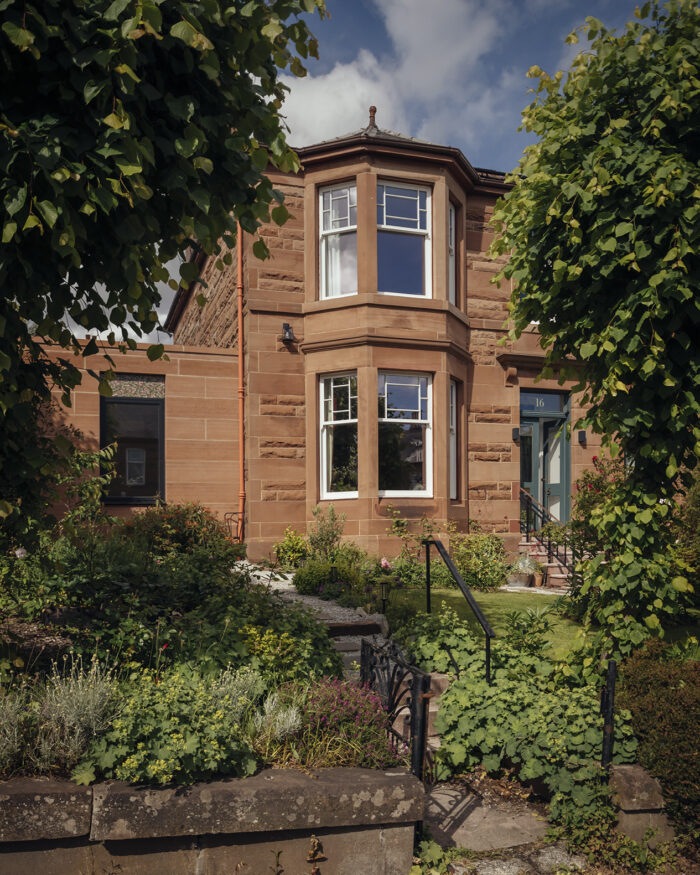
The couple’s end-of-terrace home is made of the red sandstone typical of Glasgow Image credit: Jim Stephenson
Renovation brief
The couple’s brief to architects Loader Monteith was to add living space, make better use of the existing space on the ground floor, take the house off gas and redefine the relationship to the garden – all with a focus on high environmental standards and natural materials.
Loader Monteith is a Glasgow-based architecture practice with an ethos based on collaboration and regenerative architecture. Its portfolio is full of beautifully simple, pared back sustainable builds.
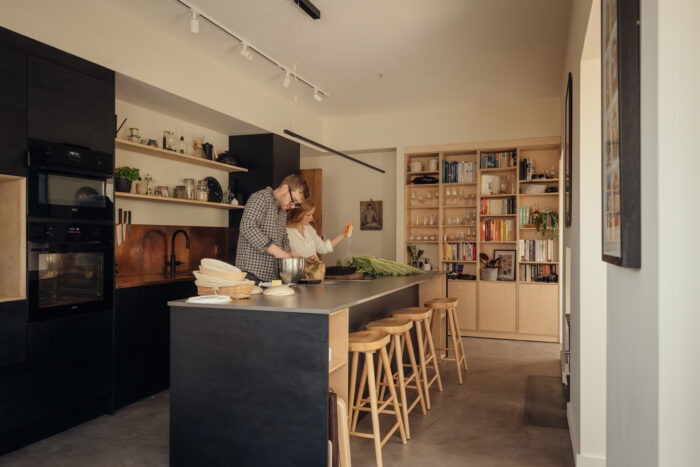
Fenella designed the kitchen units herself Image credit: Jim Stephenson
Retrofit model
James and Fenella’s late 19th century home was structurally sound but tired with poor insulation, disconnected interiors and energy-intense systems.
With daughters Lily, five, and Eve, two, they also have the growing needs of a young family to accommodate.
Drawing on their architects’ extensive experience of sustainable architecture, including several Passive House builds, the couple set out to demonstrate that traditional terraced houses – which make up a quarter of the UK’s housing stock and often have structural fabric rated significantly below modern standards of thermal efficiency – can make climate-friendly homes.
Starting work
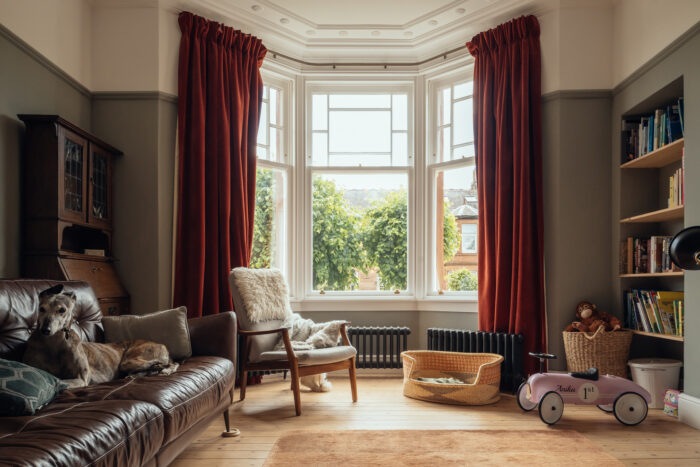
The generous bay in the original sitting room – with refurbished radiators fed by the heat pump Image credit: Jim Stephenson
Determined to preserve the character of the original home while prioritising modern standards, the couple first stripped the house back to brickwork.
Meanwhile, plans were drawn up for a new extension featuring a kitchen and living and utility spaces.
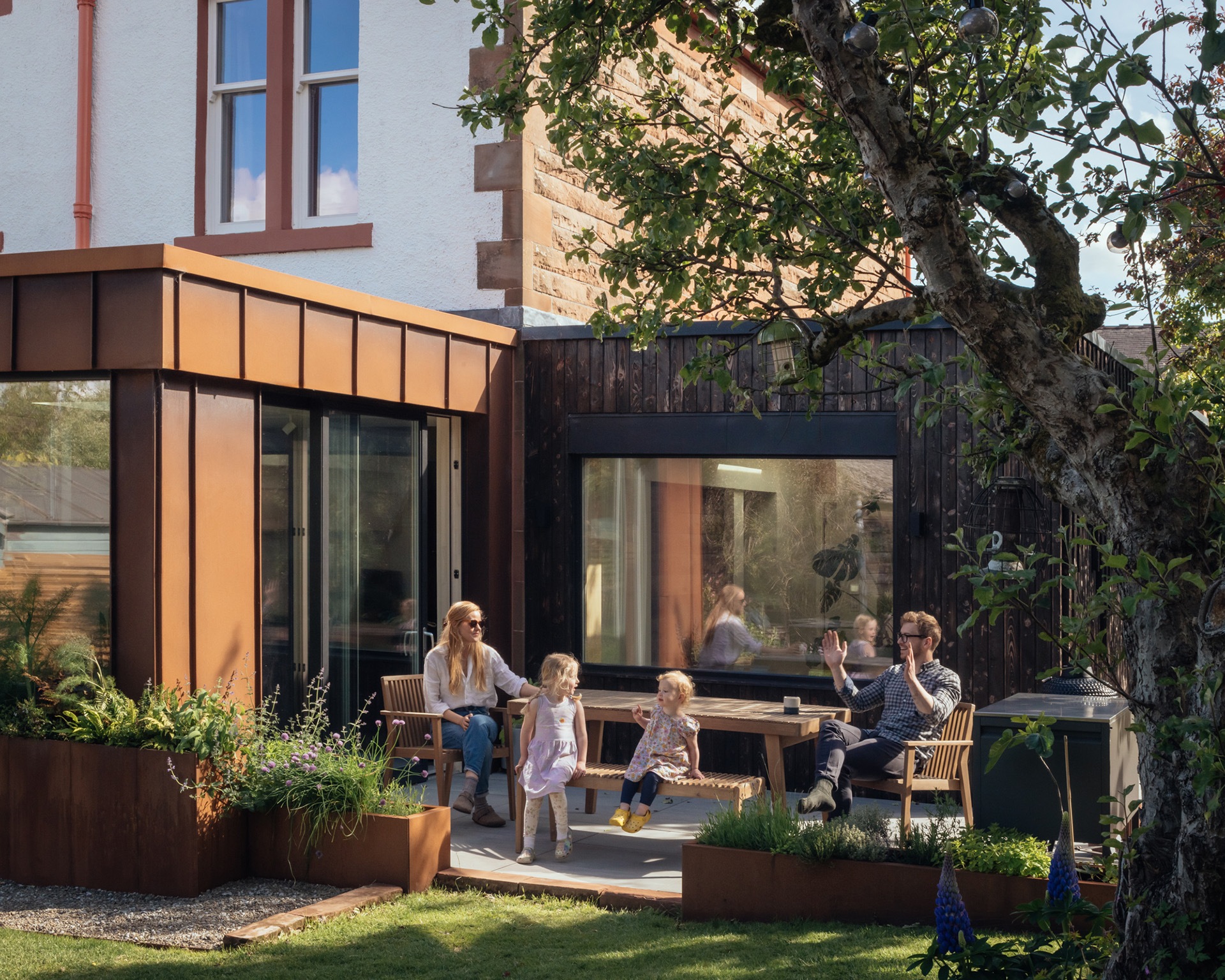
This would be covered with standing seam Corten steel cladding – a perfect modern rusty-red foil to the original red sandstone.
Existing extension
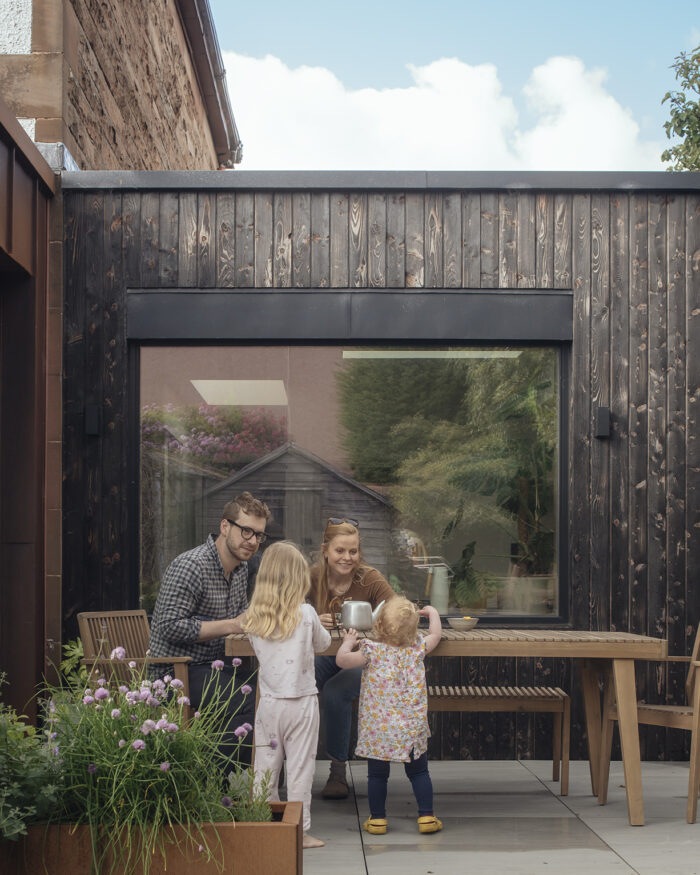
The rear of the existing sandstone side extension has been clad with charred larch Image credit: Jim Stephenson
To avoid waste, the existing 1970s side extension was retained and refurbished.
Externally it was clad with charred larch cladding, which makes a satisfying textural and visual contrast to the red sandstone of the main house and the Corten steel.
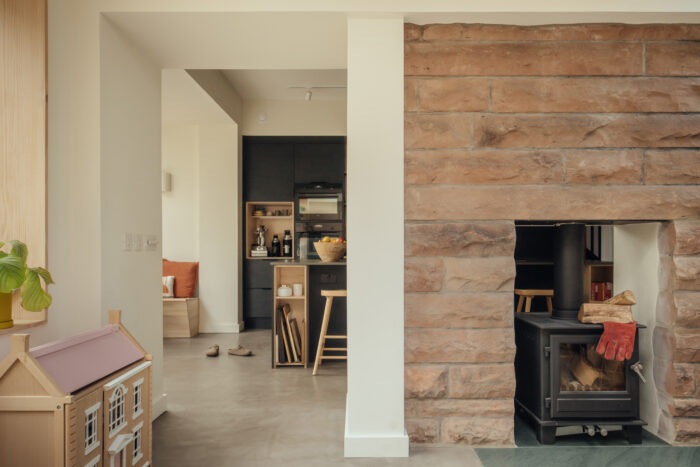
Feature wall: the old exterior wall of the property now sub-divides the living space, with a focal point wood-burning stove Image credit: Jim Stephenson
Inside, the underused old extension became a new open-plan living space.
The tactile stone wall that once formed the original exterior side wall of the house has been fitted with a double-sided fireplace.
This is now a cosy new heart of the home where the young family can spend quality time together – though the broken-plan approach means there is also plenty of space for individual activities and alone time too.
Keen gardeners
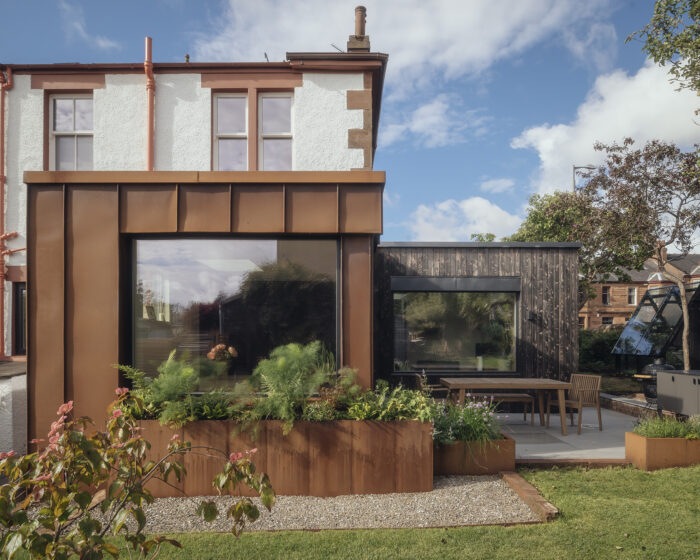
Both extensions have large windows giving generous views of the garden Image credit: Jim Stephenson
The new extension offer easy access to the large rear and side gardens, where the family enjoys caring for a thriving kitchen garden.
A new greenhouse made from salvaged glass is set alongside mature pear and apple trees.
DIY hard work
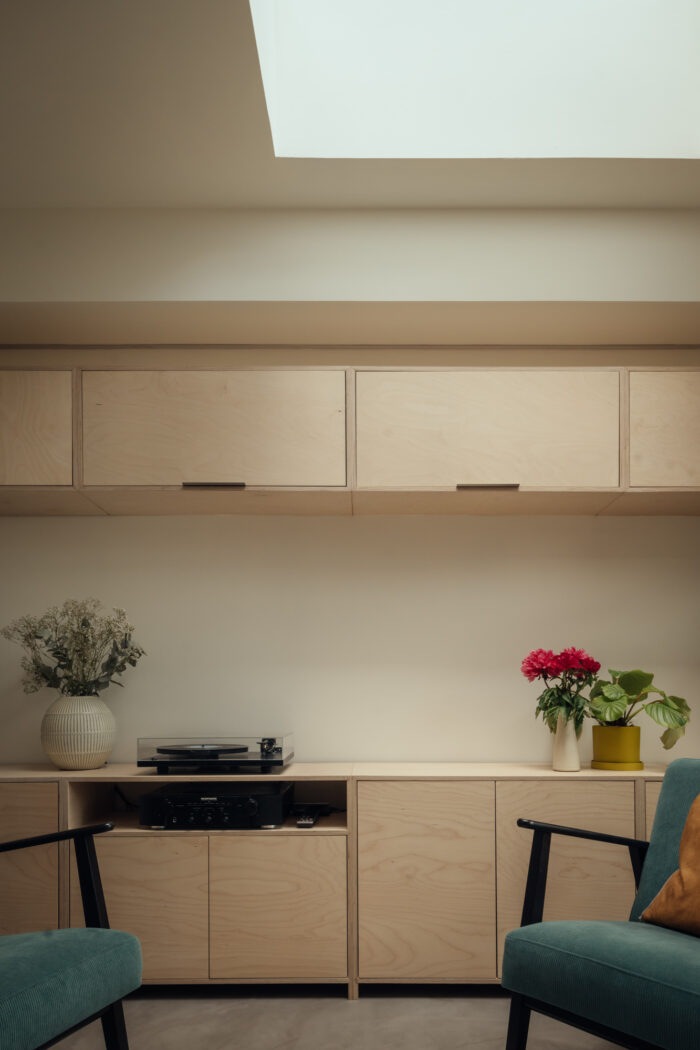
Simple, clean lines and sustainable materials define this build Image credit: Jim Stephenson
Much of the finishing was carried out by James and Fenella themselves. They sourced environmentally friendly materials and took on the mammoth task of insulating the home.
James – who rose to fame as a finalist in the third series of the Great British Bake Off in 2012 – installed thick insulation across floors, walls and the roof, significantly reducing heat loss.
“With his trademark scientific approach, he used an infrared camera to identify areas of heat loss and test the home’s thermal performance.
He asked Loader Monteith for a practical kitchen layout for baking, proving and brewing.
His new “workspace” has a generous island and a utility space to store dry goods and rest doughs.
The kitchen units were designed and CNC-cut by Fenella after she researched 3D design. They are made from birch plywood finished with dark Indian ink.
Cook books
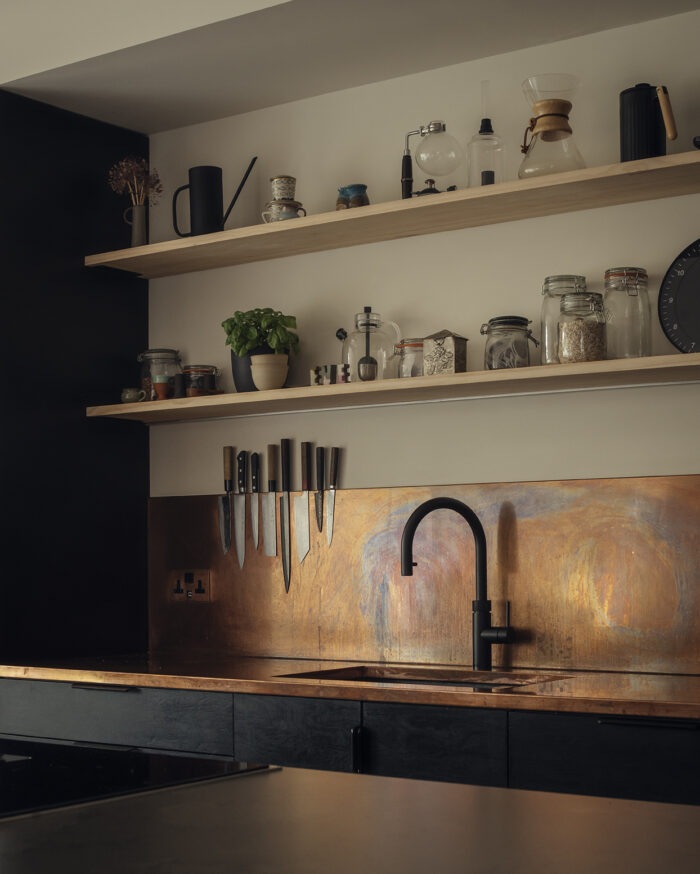
Open shelves and metal splashback: a working kitchen that looks great too Image credit: Jim Stephenson
Bread is James’ speciality, and he now has eight cookbooks to his name, which he has – impressively – managed to write alongside his continuing his career as an NHS GP.
He has written books about sourdough, the science behind baking – and even one about home brew.
His latest title, The Big Book of Bread: Recipes and Stories from Around the Globe came out last year.
James was born in Inverness but grew up in the Shetlands, where his mum was also a GP and his dad a well-known radio broadcaster and writer.
Environmental priorities
Sustainability is deeply woven into this home renovation. A healthy indoor environment, low energy use and a connection to nature were priorities for James and Fenella.
This meant choosing low-carbon renewable materials such as breathable wood fibre insulation and natural lime plaster as well as non-toxic finishes.
Sustainable features
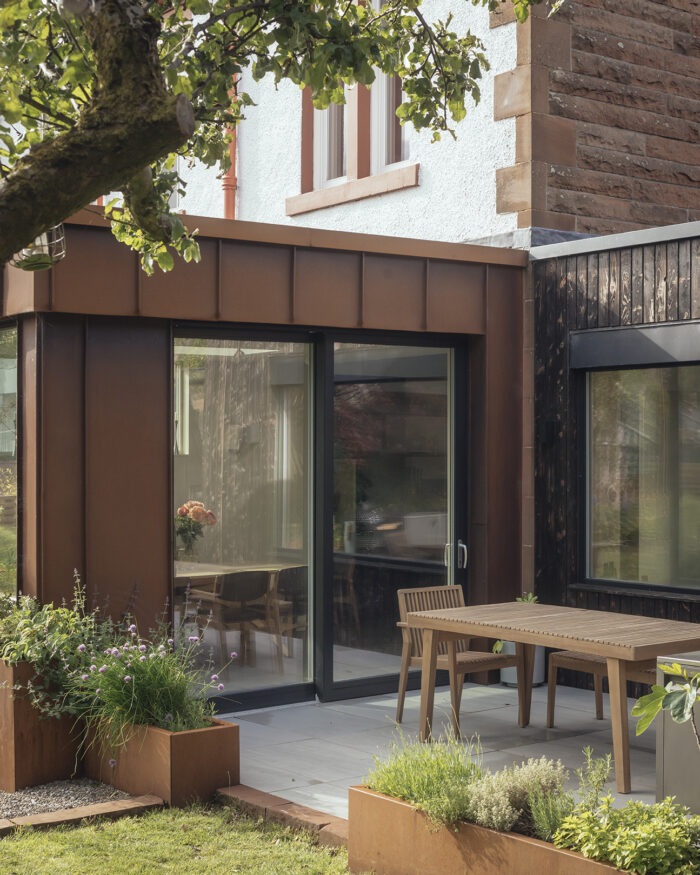
This retrofit is both stylish and sustainable Image credit: Jim Stephenson
Green roofs on both extensions, and high-performance glazing add to the project’s environment-first design.
An air-source heat pump delivers warmth through upgraded cast iron radiators and runs just three to six hours a day.
Taking advantage of smart energy tariffs, the system operates mainly during off-peak hours, and this has reduced the family’s energy bills to less than a third of what they once were.
Despite the home’s sensitive location in a conservation area, the architects successfully navigated planning restrictions to install green tech.
Loader Monteith made the case for solar panels, eventually securing approval despite local planning laws by making a compelling case based on environmental necessity, which made the Old Red House the first in the area to gain such approval.
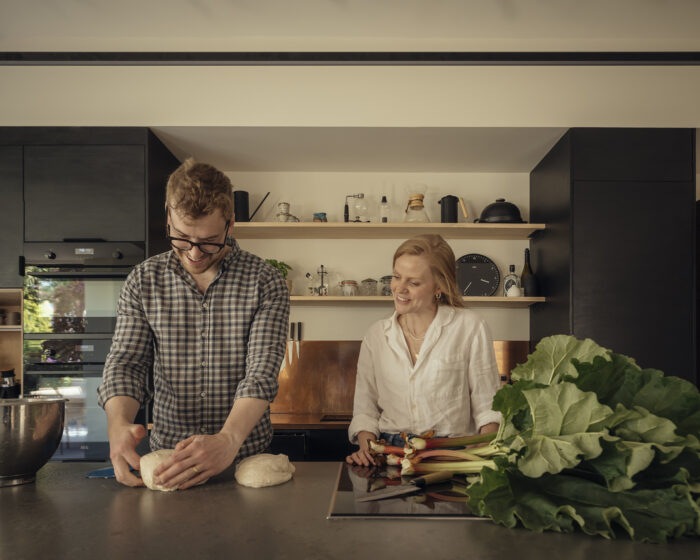
For a keen baker like James – pictured here with wife Fenella – getting the kitchen just right was a priority Image credit: Jim Stephenson
Prototype for progress
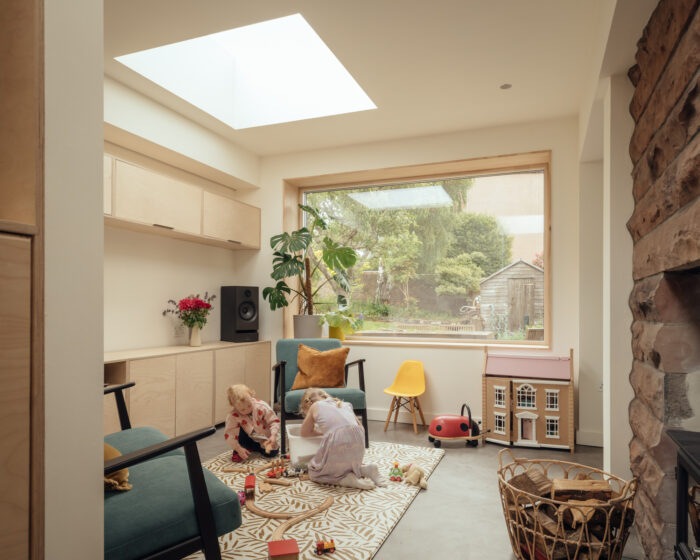
The girls playing in the original extension that is now bathed with light from a new skylight Image credit: Jim Stephenson
The couple hope their renovation will be viewed as a prototype for progress: something that is replicable – and accessible – at scale across the UK.
James explains, “When we undertook the project, we looked into the models for making a house sustainable.
“Passive House and EnerPHit are incredible but largely inaccessible to the average DIYer.
“So we used this project as an opportunity to see if a fairly common old home could be taken very close to net zero and still be a comfortable, beautiful space to enjoy as a family. We think it’s done just that.”
The team behind the project believes that the Old Red House demonstrates that comprehensive retrofits can be carried out sensitively and affordably, even in an urban context with tough planning restrictions – and that a similar model would work on much of the UK’s old housing stock.
Matt Loader, director at Loader Monteith, reflected, “We are facing crises in both housing and the environment in the UK, and the Old Red House is a testament to the changes we can collectively make to play a small part in addressing these.
“For us, this project demonstrates that deep retrofits are both achievable and replicable.
“Old Red House is more than a renovation; it shows that, with careful design, collaboration, and sustainable thinking, terraces across the country can be transformed into low-carbon, beautiful homes.”